
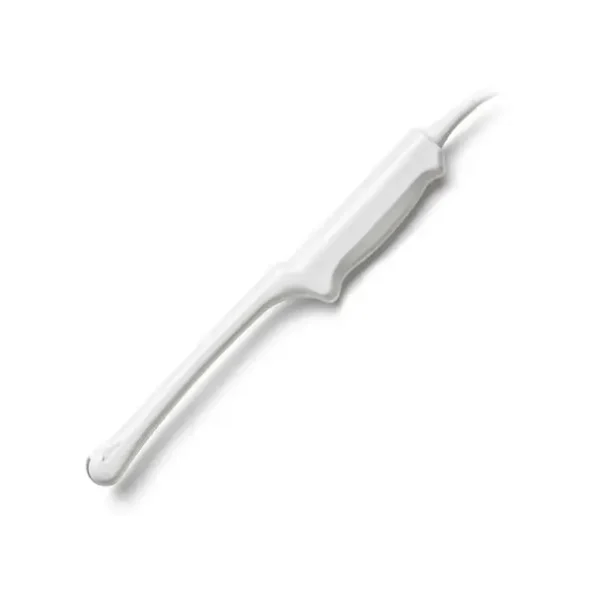
The Philips BP10-5EC is a bi-plane endocavity ultrasound transducer (5–10 MHz) used in urology, prostate brachytherapy, and transrectal diagnostics. Because bi-plane endocavity probes house two independent piezoelectric arrays inside a narrow shaft and undergo repeated high-level disinfection (HLD) cycles, their most frequent failure modes are acoustic lens delamination, distal seal fluid ingress, bi-plane element dropout, and strain-relief cable breaks.
| Manufacturer | Philips |
|---|---|
| Probe model | BP10-5EC |
| Transducer type | Bi-Plane Endocavity Array |
| Frequency range | 5 – 10 MHz |
| Compatible systems | Philips Affiniti 50, Philips Affiniti 70, Philips Epiq 5 |
| Clinical applications | Urology, Prostate Biopsy, Endorectal / Endocavity Imaging |
Common Failure Modes on the Philips BP10-5EC
- Acoustic lens delamination or bubbling across either the sagittal or transverse array window caused by chemical disinfectant absorption or gel permeation.
- Electrical leakage test failure due to micro-cracks in the distal tip seal, housing seam, or strain-relief boot.
- Dark vertical dropout bands in B-mode or color Doppler when switching between the two bi-plane arrays (flex-circuit or coaxial micro-coax fatigue).
- Intermittent image loss or system recognition errors when flexing the cable near the handle strain relief or locking connector.
Repair Assessment & Turnaround
Send a photo of the probe label and a B-mode image showing the artifact (or leak-test reading). We provide a written repairability evaluation before you ship, complete bench repairs in approximately 1 week, and return every repaired Philips BP10-5EC with an electrical leakage test report and a 6–12 month warranty.


