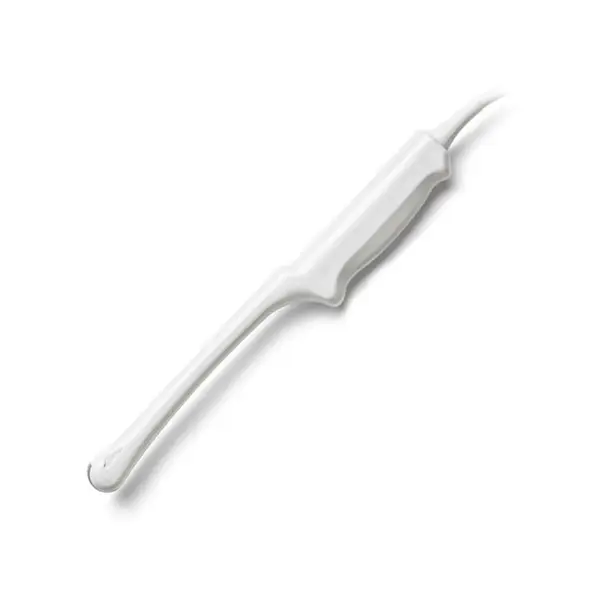
This page covers the Toshiba PVT-382BT from a repair perspective: the failure modes we see on this class of probe, how to check the probe yourself, and what information gets you an accurate repair quote.
| Manufacturer | Toshiba |
|---|---|
| Model | PVT-382BT |
| Probe type | Convex array |
| Compatible systems | Toshiba Aplio 300 (TUS-A300), Toshiba Aplio 500 (TUS-A500), Toshiba Aplio MX (SSA-780A), Toshiba Aplio XG (SSA-790A), Toshiba Viamo (SSA-640A), Toshiba Xario (SSA-660A) |
In service the PVT-382BT is most often found on Toshiba Aplio 300 (TUS-A300), Toshiba Aplio 500 (TUS-A500), Toshiba Aplio MX (SSA-780A), Toshiba Aplio XG (SSA-790A), Toshiba Viamo (SSA-640A) and other listed systems. Console-side settings and module revisions still vary, so the exact system build is part of any assessment.
On convex probes such as the PVT-382BT, the curved acoustic window wears unevenly under pressure-heavy scanning; lens condition is the first thing to check when image quality drops.
Common failure modes for the PVT-382BT
Match what you are seeing against the table below. The right-hand column reflects how faults of this kind typically assess – the actual verdict always depends on the individual probe.
| What you see | Likely cause | Typically repairable? |
|---|---|---|
| Noticeably weaker penetration than the paired probe | Reduced acoustic output from element ageing or a delaminating lens | Case by case |
| Pin damage or corrosion visible in the connector | Mechanical damage from forcing or dropping the connector | Usually repairable |
| Cracked or dented housing | A drop or knock; housings are routinely replaced or resealed | Usually repairable |
| Cuts, gouges or discoloration on the lens membrane | Wear from use, or chemical attack from disinfectants | Usually repairable |
| Strain relief pulling away from the cable or gone rigid | Flex fatigue where the cable meets the probe or connector | Usually repairable |
| Connector lock broken or hardware missing | Mechanical damage to the connector shell | Usually repairable |
| Fuzzy or noisy image that cleaning does not fix | Lens wear or early element degradation | Case by case |
Check these before you ship the probe
- Flex the cable gently along its length while imaging – intermittent dropout points to broken conductors.
- Examine the connector for bent or corroded pins, cracks and a working locking mechanism.
- Compare penetration and uniformity against a known-good probe on the same preset.
- Photograph the complete manufacturer label – the exact revision matters for parts compatibility.
- Run the system’s built-in probe test or element check if your console provides one.
Repair, exchange or replace — which applies to your PVT-382BT
For the PVT-382BT, think in terms of damage depth: surface and cable-level faults are usually repairable at a fraction of replacement cost; acoustic stack failures are evaluated case by case; extensive element loss generally means replacement. Send the symptoms and photos first – that determines the path before anything ships.
What we need to quote your PVT-382BT repair
- A clear photo of the complete manufacturer and model label on the probe
- A description of the fault: what you see on screen and when it started
- The ultrasound system (console) the probe is used with
- Screenshots or photos of the image problem, if the fault is visual
- Photos of any physical damage – lens, housing, cable or connector
Product imagery on this page is representative of the PVT-382BT probe family and is not a photograph of your specific unit. This page does not claim OEM authorization or universal compatibility. Repair feasibility, turnaround and commercial terms are confirmed in writing after assessment of the actual probe.